
How Federal Health Policies Support Hospitals
Hospitals operate differently from other businesses. It’s why a number of federal policies and programs exist to help them bridge different financial gaps.
America’s hospitals are there 24/7, delivering essential care whether patients have insurance or not. Unlike other businesses that set a price and know what they’ll receive in payment, what hospitals charge and what they’re ultimately paid are rarely the same.
Government-funded insurance like Medicare and Medicaid often pay less than the cost of care, while private health insurance companies regularly make it harder for patients to get care and hospitals to get paid. Add rising costs for supplies, labor, and infrastructure and hospital economics become increasingly challenging.
Federal funding programs were created to offset the financial shortfalls hospitals face when caring for patients who cannot pay or whose insurance does not cover the full cost of care. They also support hospitals’ ability to remain ready around the clock to treat every kind of illness and injury. Without the help of federal funding programs to address the different financial pressures hospitals face, they would struggle to continue serving their communities and maintain the talent, tools, and technologies required to deliver quality healthcare.
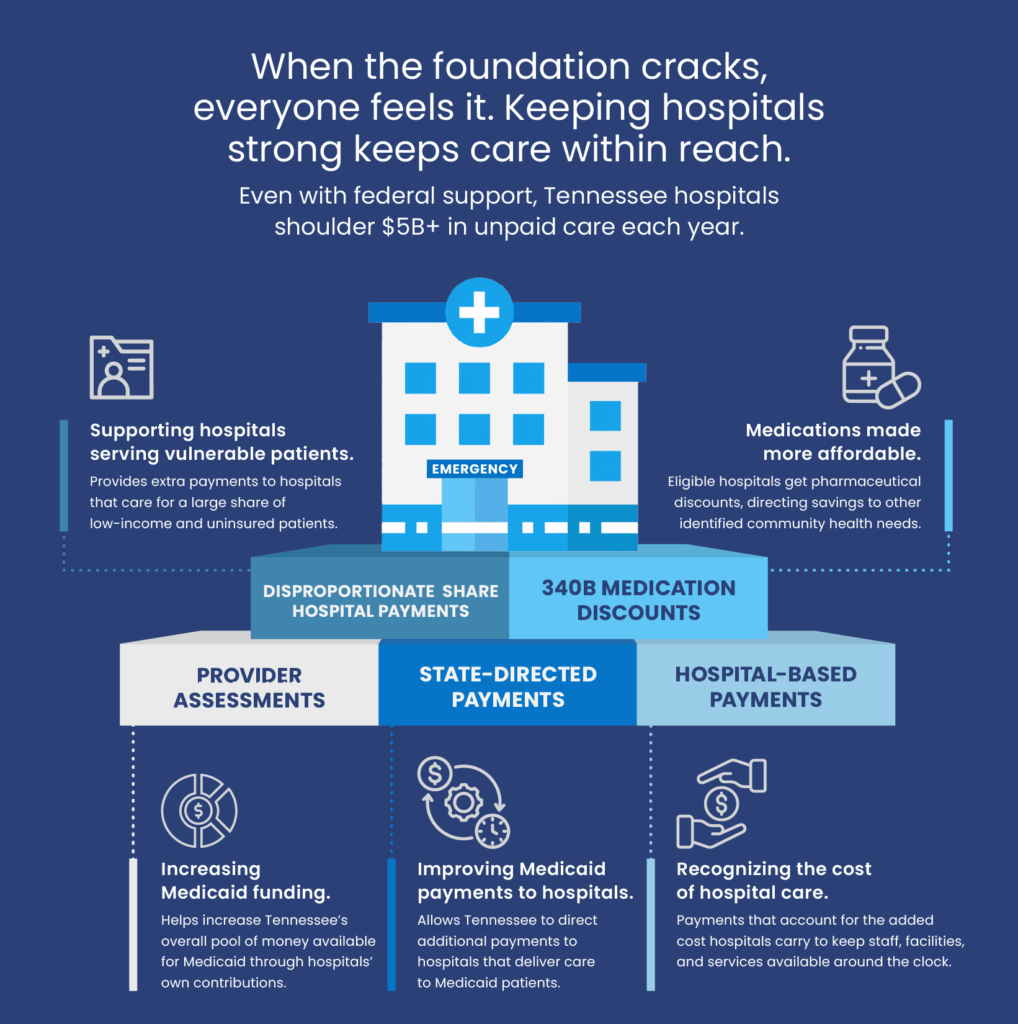
Here are five federal programs at risk today which help hospitals bridge the financial gap:
BE A PART OF THE STORY
Get the latest stories, updates, and ways to support the Tennessee hospitals that support you
Hospitals and the people that work in them are here for everyone in every community across Tennessee. How have they been here for you? We want to hear from you and share your stories as a part of the “Here for Every” campaign.