
HERE FOR EVERY
question
How Financial Counselors at Hardin Medical Center Help Patients Find Answers
A hospital bill or insurance statement can leave patients with more questions than answers. At Hardin Medical Center, financial counselor Katie Short works alongside nurse navigator Casey Pickle to help patients understand their options, connect with available assistance and find a path forward—so financial uncertainty does not become another barrier to care.
The phone rarely stays quiet for long in the patient accounting office at Hardin Medical Center.
Some patients call because a bill is higher than expected. Others are trying to understand why insurance did not cover as much as they thought it would. Some need a test or procedure but are unsure how they will afford it.
For the past two years, many of those questions have reached financial counselor Katie Short.
Her role can begin at several points in a patient’s care. If an uninsured patient is admitted, Short may visit the patient’s room to discuss available options. Before a scheduled test, she may work with someone worried that cost will prevent them from receiving care. After a statement arrives, she may help a patient understand how insurance processed the claim, explore financial assistance or establish a payment arrangement.
“We are here to help you and to help you understand,” Short said. “With any question, I’m here to help.”

Building a Bridge to Care
For patients receiving cancer care, that support can begin even earlier.
Casey Pickle, a registered nurse who has worked at Hardin Medical Center for 15 years, stepped into the hospital’s newly created nurse navigator role in March after spending much of her career in oncology.
Pickle often meets oncology patients near the beginning of their care journey, assessing what they may need beyond clinical treatment and connecting them with the right resources.
“I just assist the patients in trying to find any avenue to help them support their journey,” Pickle said. “It’s just really helping them bridge the gap a lot of times.”
That may mean helping someone complete indigent care paperwork, determine whether insurance is in place or connect with resources for basic household or transportation needs. Hardin Medical Center has also partnered with Qualify, a third-party organization that searches for grants and copay assistance programs that may help offset the cost of high-priced medications.
For many oncology patients, Pickle is the first point of contact. She works to assess each patient’s needs and, when financial concerns arise, connects patients with Short. Pickle said the majority of the patients she consults who need financial support are referred to Short for additional guidance.
When Cost Threatens Treatment
One patient illustrates how that partnership can work.
Pickle recalled an older woman with Medicare who did not have additional coverage and was struggling to manage the portion of her treatment costs left to her. She was making minimum payments on existing balances and facing the possibility of additional expenses from cancer treatment.
For some patients, Pickle said, those costs can lead them to question whether they can move forward with treatment at all. “Patients will consider not taking a treatment regimen because they just don’t have the finances to be able to afford the drug,” she said.
Working together, Pickle and Short helped connect the patient with Hardin Medical Center’s indigent care program and available grant assistance through Qualify. That collaboration resulted in much more than financial relief.
“We were able to provide her with care without the financial worry and strain,” Pickle said. “She’s just so appreciative and thankful that she doesn’t have that financial burden during this horrific struggle.”
Pickle said the change was visible in the patient’s outlook and demeanor. “There’s so much that goes into cancer patients’ journeys,” she said. “The last thing we want them to do is have to worry about how they’re going to pay for their care.”
Making Insurance Easier to Understand
Cost questions are not limited to oncology.
One of the most common sources of confusion Short encounters involves Medicare Advantage plans. Some patients believe the plan they selected will serve as secondary coverage to traditional Medicare. They may not realize the Advantage plan has become their primary insurance or that deductibles, copayments and other out-of-pocket costs may still apply.
“They believe that they’re not going to owe anything,” Short said. “I have to explain that those Advantage plans are not a secondary to their Medicare, and this is why they’re getting bills.”
High-deductible plans can create similar surprises. Other patients contact Hardin Medical Center because an insurer or health-sharing plan wants an exact price before care is delivered. That may be straightforward for a single imaging service but more difficult for surgery or childbirth, where services may change during care.
Patients often call without fully understanding what their plan has requested. Short begins by listening. “That is the first thing—to listen and find out what part of it they are truly confused about,” said Valerie Moss, revenue cycle manager at Hardin Medical Center.
Listening Before Explaining
Sometimes the patient needs help reading a bill. Sometimes they need to understand an explanation of benefits. Sometimes they need a payment option or an assistance program. Sometimes they simply need an opportunity to express what they are worried about. “Some people just need to tell somebody,” Short said.
Once she understands the question, Short tries to translate the information into practical terms. “I want to explain so they can understand,” she said. “I’ve had patients tell me, ‘You do a wonderful job. I wish I could explain this stuff [healthcare] that well.’”
That clarity can change the tone of a conversation. The balance may not disappear, but the patient can leave knowing what it represents, what assistance may be available and what to do next.
A Team Focused on the Next Step
The need for that guidance is steady.
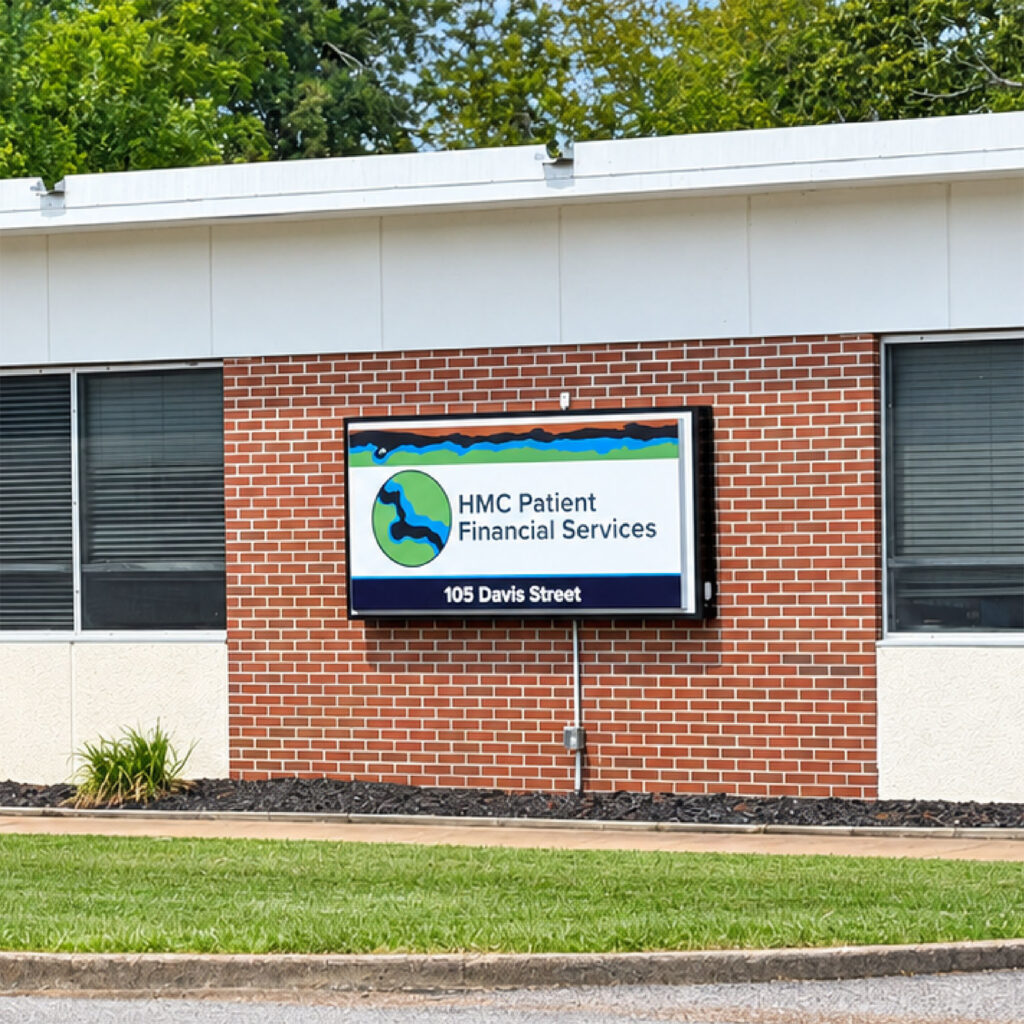
Short estimated that Hardin Medical Center’s patient accounting office may receive four or five calls an hour during busy periods, while approximately 10 patients may stop by in person on a typical day. Hardin Medical Center recently added a second financial counselor to help answer calls and meet with patients.
Moss also reviews accounts with patient balances greater than $7,500 and gives Short a monthly list of patients who may benefit from outreach. “That’s very scary, to get those types of bills,” Moss said.
For oncology patients, the new nurse navigator role adds another layer of support. Pickle said she and Short frequently work together to determine what a patient needs and where assistance may be available.
“I value having Katie as a resource to troubleshoot financial constraints for patients,” Pickle said. “She really understands the financial side, and that is something I value so much. As a nurse, that is not where my expertise lies. Having someone who understands the financial aspects and can help navigate that side is incredibly valuable to me.”
For a small rural hospital, Pickle believes that coordination can become an increasingly important service for the community. “The more that we learn and the more that we do, then the more support we’ll be able to offer,” she said. “We’re really trying to help our patients because every little bit helps.”
Here for Every Question
Financial counselors cannot control how an insurance company designs a plan or determines coverage. Nurse navigators cannot make the price of treatment disappear. But together, they can help patients understand their options, connect with assistance and avoid facing difficult decisions alone.
Pickle has heard patients say they simply cannot afford a medication. When a grant, copay program or even a discount coupon changes that equation, the response can be immediate. “To hear the relief in their voice is pretty amazing,” she said.
Short’s message to patients is equally simple. “Don’t ever be scared to call and ask a question,” she said. “You’re not going to know unless you ask.”
“Patients should be able to focus on their health and recovery, not feel alone as they try to understand a bill or navigate the cost of care,” said Jim Edmondson, Chief Executive Officer at Hardin Medical Center. “By connecting financial counseling, nurse navigation and community resources, our team works to help patients understand their options and remove barriers that might otherwise stand between them and the care they need.”
Healthcare does not end when a treatment is ordered or a patient leaves the hospital. It continues through the questions, decisions and support that shape what happens next.
At Hardin Medical Center, someone is here to listen—and here for every question.
BE A PART OF THE STORY
Get the latest stories, updates, and ways to support the Tennessee hospitals that support you
Hospitals and the people that work in them are here for everyone in every community across Tennessee. How have they been here for you? We want to hear from you and share your stories as a part of the “Here for Every” campaign.